Monday, July 23, 2012
The Blob
This is one of those movies everyone thinks they have seen -- but most people haven't sat and watched it, beginning to end. It has a weird subtext about the nature of authority, and the roles we fall into. The way the camera dwells on the moment when the school principal contemplates smashing the window is clearly meant to be the pivot point of the film. What's strangest about the whole thing, really, is that for a goopy teen sci-fi movie -- it's artfully done. It clearly really meant something to the man who created it. Who were you, Irvin Yeaworth? How does a Hollywood outsider like you make something like this happen, and make it succeed? And why are your other films so bad? There's something important here. I wonder if I'll ever know what it is.
Sunday, July 15, 2012
Pimsleur Conversational Swedish
I have gone through life convinced I am bad at language learning. I remember being in first grade, and excitedly finding language learning books at the library: "Learn French" and "Learn Italian". The books looked simple, cartoony, and fun. My parents dissuaded me from getting both: "It's hard enough just to learn one language." But I insisted. When I got home, my heart fell as I realized that reading and memorizing word after word was painfully difficult. I had fantasized that all I had to do was read the book, just as I'd read any book, and the knowledge would stay. Later, I took classes in French at school, and still later in Latin. The experience was mostly dismal. A difficult struggle all along, with lots of repetitive copying and tedious memorizing. And with very little payoff. In some ways it seemed strange to me -- I delight in learning arcane nooks and crannies of the English language, and I seem to have a natural gift for spelling words properly. In second grade, a fellow student was challenged with his spelling, and the teacher grew frustrated teaching him. "Richard," she growled, "for goodness sake, just sound it out! Jesse, that's what you do, right? Tell Richard how you do it." I became nervous, because her system of "sound it out" always seemed strange to me. And I tentatively explained, "Actually, I don't sound things out. I just... taste the words in my mouth, and I can see how to spell them." I believe it was the first time I saw an adult cry.
My frustrations at learning other languages, though, made me decide I must be one of those people for whom foreign language does not come naturally. When I learned of the research showing that toddler minds are specially wired for language learning, I nodded along with it. "Of course. No wonder it is hard for me to learn another language. My brain just isn't wired for it any longer." It seemed as impossible as learning to fly -- but that didn't make it any less fascinating to me, for I generally find the impossible challenges the most intriguing.
And when I stumbled across an ad for a "Revolutionary Method of Language Learning" (in skype of all places) it caught my interest. I watched a short video explaining the Pimsleur method, how it was based in speaking, not in reading and writing, and how it was a pure audio experience, I became intrigued. I know I am an "audio reader" (that is, I turn words into voices in my head, not pictures) and I prefer audio books to printed books in most cases, so I became curious about trying it out. I had an upcoming trip to Sweden for a conference, and my wife and I had taken a try at learning a little Swedish from "Complete Swedish" that we'd found at the bookstore, and it was going badly. "Complete Swedish" thought the best way to learn the language was to focus on learning the peculiar alphabet, and the subtle differences in vowel sounds. Then it hits you with a baffling array of tongue twisters in Swedish. We quickly decided that, wow, Swedish must be way too hard for us to learn. This video does a good job of capturing our bafflement. So, I figured, why not put the Pimsleur method to the test? And see if I can learn some Swedish from it?
I bought an 8 disk, 16 lesson package on Amazon, and I was blown away. NEVER have I found language learning so easy. The system is simple. You listen to the CDs, one lesson a day, half hour a day, and do what they say. They generally ask you to do three things:
1) Listen to a phrase, and repeat it. "The Swedish word for 'Hello' is 'Hej.' Say 'Hej.'"
2) Translate a phrase back into the foreign language. "Say 'Hello' in Swedish."
3) Take part in this Swedish conversation. "Hej ....
And really, that's pretty much it! The whole thing is paced in such a way that it challenges your memory, but doesn't overwhelm it. I was sure that when I went to the second lesson, I'd forget everything from the first, and quickly fall behind. But instead, the second lesson consisted of a lot of review and expansion of the first lesson, and quickly I felt my facility with the language growing. By the end of 16 lessons, I could confidently:
- Exchange simple greetings
- Ask for directions
- Count to 100
- Have simple conversations about money
- Order things from a restaurant
- Have simple hotel conversations
- Explain that I understood a little Swedish, but not much, and that I'm an American who speaks English
And the key word is *confidently*. I had NEVER had this feeling before, with any foreign language. Normally, when I would try to remember words in another language, my mind would seize up. I was in Paris, last year, for example, and when I would try to make use of the two years of French instruction to speak, words would fly from my mind, and natives would just roll their eyes at my stammerings. But after going through the Pimsleur system of Swedish, where you speak and speak and speak, the speaking came naturally to me. I felt confident that if I kept going with the system, and spent time immersed in the language, that I could learn more and more. This was a liberating feeling for me -- I felt like I could fly.
So -- was it useful when I got to Sweden? Only a little, honestly. I think everyone we met could speak confident English, and I quickly learned that the question "Förstår du Engelska?" (Do you understand English?) was kind of insulting, since most educated people in Sweden speak English fairly well. It was enough to say "Hello," which communicated that I would prefer to speak in English. In fact, the natives often seemed excited to show off their English (I found the attitude in France was often the opposite). But still, my limited Swedish helped me to understand lots of little things, and Swedes I met were impressed that, as an American, I knew any Swedish at all. But for me, it really wasn't so much about practical necessity, it was much more about connecting and understanding, and exploring a culture.
So, in short, I'm thrilled with the Pimsleur system. I can't imagine it works for everyone, but for me, it works wonderfully. I'm learning Mandarin Chinese now, in preparation for a trip to Tianjin this September, and already, only four lessons in, I feel like I have a handle on the basics, and I'm thrilled to have some insight into a language that had always been a total mystery to me. After I finish the basic Mandarin (or 普通话, or "Putonghua"), I bought a complete set of Spanish -- over 100 lessons, since my wife speaks Spanish fluently, and my daughter is learning it in school, I figure if I catch up, we can all learn together. The "complete sets" are very pricey, especially the CD versions (the MP3 versions are much cheaper), but I found a used one on Ebay for a pretty reasonable price.
To my surprise, it is possible to learn to fly -- and as it turns out, I love flying!
Hej då! Zài jiàn! Goodbye!
Sunday, April 15, 2012
Dracula
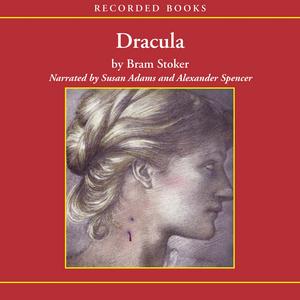
I read this recently, because I'm working on my own vampire story, and I figured I should go right to the source. I was AMAZED at how different it was than I had expected. It is one of those stories that everyone thinks they know, because they've seen so many tellings of it. But the original is not what I expected at all. Here's why:
1) The format. It is not told like a normal novel, at all. It is actually somewhat post-modern. The book is a collection of journal entries, phonograph transcripts, and clippings from magazines and newspapers, that all interlock to present an unusual story.
2) The book has an unexpected focus on technology. I would have expected it to be a gothic story, set in the past, but it was published in 1897, and it was startlingly up-to-date, with Kodak cameras, typewriters, personal phonographic recording systems, telegrams, and overnight trains across Europe all playing key roles in the story. America is discussed frequently. In a real sense, it is a story about old vs. new. This contrast makes Dracula more horrifying, and throws his ancient evil into sharp relief against the other characters in the story.
3) I had always figured the story was something like: "For some reason, travellers crossing Europe are waylaid, and have to stay at Dracula's castle, where a bunch of creepy things happen to them." In other words, the trope established by The Old Dark House. But that is not the story at all. The story is much more nuanced and complex. You see, Count Dracula has a problem. He's been eating people for hundreds of years, and all the locals know about it, but are unable to stop him. So, they all take a lot of care to stay away, and to ward him off. As a result, he has to work harder and harder to survive. Eventually, he hatches a plan. Abandon the castle, and move to London, where it is so crowded, and there are so many poor, that he can surely pick off someone every few weeks, and no one will know. So, he works to learn English, buys a bunch of travelogues about London, and sends for a London real estate agent to help him buy a house there. The whole thing is very logical, very real, very solid. And this is the real magic of the book, I think.
4) The characters are much more solid and real than I would have expected. I thought they would be caricatures, but they aren't, not really. They are all thinkers, all very logical. The book isn't afraid to get edgy. When Johnathan Harker tells the tale of the vampire girls trying to seduce him, his lust is palpable and undisguised, and would surely have been consummated if not for Dracula's interruption. Van Helsing is similarly interesting -- a true man of science, whose eyes and mind are wide open. He's not a superhero, but nor is he afraid to plunge into the unknown, and systematically deal with it.
In short -- this isn't the book I expected. Over 100 years after publication, it is has a vitality and a freshness that surprised me. And so... my plan. One day soon, I hope to start a Kickstarter: "The Dracula Box." This would be a new publishing of the original text, separated into diaries, newspaper cutouts, and phonographic recordings, to give a new kind of reality to the original text. I'll need to find independent bookbinders, people who have 1897-style handwriting, etc. I will do it, sometime... let me know if you are able to help.
1) The format. It is not told like a normal novel, at all. It is actually somewhat post-modern. The book is a collection of journal entries, phonograph transcripts, and clippings from magazines and newspapers, that all interlock to present an unusual story.
2) The book has an unexpected focus on technology. I would have expected it to be a gothic story, set in the past, but it was published in 1897, and it was startlingly up-to-date, with Kodak cameras, typewriters, personal phonographic recording systems, telegrams, and overnight trains across Europe all playing key roles in the story. America is discussed frequently. In a real sense, it is a story about old vs. new. This contrast makes Dracula more horrifying, and throws his ancient evil into sharp relief against the other characters in the story.
3) I had always figured the story was something like: "For some reason, travellers crossing Europe are waylaid, and have to stay at Dracula's castle, where a bunch of creepy things happen to them." In other words, the trope established by The Old Dark House. But that is not the story at all. The story is much more nuanced and complex. You see, Count Dracula has a problem. He's been eating people for hundreds of years, and all the locals know about it, but are unable to stop him. So, they all take a lot of care to stay away, and to ward him off. As a result, he has to work harder and harder to survive. Eventually, he hatches a plan. Abandon the castle, and move to London, where it is so crowded, and there are so many poor, that he can surely pick off someone every few weeks, and no one will know. So, he works to learn English, buys a bunch of travelogues about London, and sends for a London real estate agent to help him buy a house there. The whole thing is very logical, very real, very solid. And this is the real magic of the book, I think.
4) The characters are much more solid and real than I would have expected. I thought they would be caricatures, but they aren't, not really. They are all thinkers, all very logical. The book isn't afraid to get edgy. When Johnathan Harker tells the tale of the vampire girls trying to seduce him, his lust is palpable and undisguised, and would surely have been consummated if not for Dracula's interruption. Van Helsing is similarly interesting -- a true man of science, whose eyes and mind are wide open. He's not a superhero, but nor is he afraid to plunge into the unknown, and systematically deal with it.
In short -- this isn't the book I expected. Over 100 years after publication, it is has a vitality and a freshness that surprised me. And so... my plan. One day soon, I hope to start a Kickstarter: "The Dracula Box." This would be a new publishing of the original text, separated into diaries, newspaper cutouts, and phonographic recordings, to give a new kind of reality to the original text. I'll need to find independent bookbinders, people who have 1897-style handwriting, etc. I will do it, sometime... let me know if you are able to help.
The Descendants
This movie was simple and interesting. It is mostly a showcase for character performances, but its use of symbolism is fascinating, too. On one level, Hawaii is clearly a metaphor for isolation, but at the same time, it's not just a backdrop. The realities of Hawaii's problems play an integral part in the story. I wonder, though -- what is it about George Clooney that makes him such a strong fit for mid-life crisis movies about isolation? (Hmm... I never wrote about Up In the Air -- I guess I better do that.) He, Tom Hanks, Robin Williams, and Tom Cruise have something in common this way -- they are each typecast into specific emotional roles that are a little hard to define.
Sunday, February 5, 2012
Motion Picture Projection
This book, from 1928, was fascinating to read, and it convinced me of one thing: James Cameron is OLD! No wonder he pulled off Avatar -- he's been working on motion picture engineering for almost a hundred years! The book has a wealth (1200 pages) of details and images that really show how complex projection was, even then. What fascinated me the most, though, were descriptions of how to get interesting "Brenkert effects" from a Brenograph machine. This was a machine that shone light through rotating disks made of mica, to get hypnotic visual effects, meant to accompany music, or to enhance slide shows. There is even talk of how to use these effects to enhance prologues! If you don't know what those are, go watch my favorite movie: Footlight Parade! You can see some cool Brenograph effects here.
Anyway, if you plan to time travel to 1928 and work in a projection booth, this book is surely invaluable. I wonder if I can get James Cameron to sign it?
MetaGame
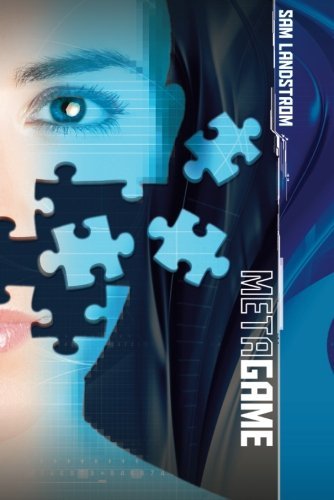
I really should have blogged about this ages ago. After I gave my DICE 2010 talk, the author, Sam Landstrom, send me a copy. And I totally loved it! In fact, in a real way, it inspired me to give this other talk.
In MetaGame, Landstrom describes a totally gamified world of the future. In order to make this come about, he had to make certain assumptions. First, some screwed up thing happened with marriage law, basically allowing freeform creation of arbitrary families, essentially creating a guild-oriented world. Constant sensing of everything has then also allowed for a system that can award points for all kinds of activities. What is startling about the book is how thoroughly and thoughtfully Landstrom has thought everything through. I particularly liked his detailed descriptions concerning the future of MMORPGs. The government has decided that sedentary gaming is bad for physical health, so all entertainment gaming must involve real motion. So, accordingly, MMORPG players roam the world in augmented reality glasses. I particularly liked the detail that non-players they run into appear as ghosts in the game, so that they can be avoided, but it is obvious you shouldn't talk to them. The book is full of fun details like that. I enjoyed the book immensely -- someday I'll make my list of the ten most provocative virtual reality books, and this will definitely make the list!
Monday, December 26, 2011
Main Street
After reading Babbitt, I decided I should probably also read Main Street, since it was Lewis's first successful novel, and also his most successful novel. It is much longer than Babbitt, and while it grabbed me at first, it started to lose me as it went on. It is basically a story of a smart, independent woman who finds herself smothered by the fearful, petty nature of small town life. I've always had a hard time with gossip and small talk of all kinds, and so I was able to relate to it easily. I remarked to my mother that I was going to read Main Street, and she said, "Oh dear... it's so depressing." And indeed, I found that to be the case. Carol, the protagonist, is thwarted at every conceivable turn in her attempts to find some way to elevate the citizens of Gopher Prairie. What really makes this a great novel, I think, is that it is obvious that on some level, Carol is right that the townspeople are petty, stupid, and hypocritical, but at the same time, she is both arrogant and naive. Her desire to connect to the world of ideas makes her unable to successfully connect with people. While I liked the book, it does have a dark quality, and it goes on for so long, that my candle of hope burned out. But it did leave me with a number of memorable images -- the descriptions of the party games that Carol constructs, and how they play out are a wonderful commentary on the human condition, and "Main Street talk" as a term referring to banal neighborhood small talk has become a permanent part of my vocabulary. I also remain fascinated that what makes this novel great is that it doesn't take sides -- it paints everyone's foolishness equally. It's also a rare thing -- a novel by a man that has a female protagonist that seems somewhat credible... at least to me. I'd love to hear the point of view on this from any women who've read the book.
I'm sure I will long be quoting: "We'd get sick on too many cookies, but ever so much sicker on no cookies at all."
Subscribe to:
Posts (Atom)


